Beyond the Riverbank's full website: www.beyondtheriverbank.com

Thursday, 28 March 2013

The Downs, The White of Snow and Broom Lakes...


Working up near Dunstable Downs, I hope to be able to get out and enjoy the incredible scenery and wildlife. A rich chalk grassland, the highest point of Bedfordshire, an Area of Outstanding Natural Beauty, numerous Sites of Scientific Interest, and two scheduled ancient monuments definitely make it worth a visit (sold it to you?!). My first walk across the top of the downs to take some panoramic shots proved successful. A red fox weaved its way through open fields, dodging the crows, and continuously got hassled by the magpies. The fox squatted on occasions, scent marking the fencing and leaving its feces across the downs.

The Downs on an overcast day - you can see five counties on a good day!

Watching fox on the Downs!
A 360 view from the top of the Downs


 A few weeks back, I posted about how incredible our world can become when covered in the bright white of frozen water, chaotically fallen as snow. Momentarily, spring looked like it might be on the way; as the snow drops finished flowering, and began to decay, daffodils started to spring up across grass verges and under hedgerows.

Death of the snow drops

Daffodils by the river

Not quite. As I am sure you are aware, more shocking weather, more snow, and more ice engulfed the country. Which has meant news reports packed with horror stories and a great deal of moaning from pretty much everyone I have spoken to.

Snow showers!

Icy water of the River Ivel

The problems snow, ice and freezing temperatures cause are clearly an absolute burden on peoples lives. Yet, there is no denying its beauty. Seeing the ice on the river, and then the light, white snow fall from the sky, I could not help but wonder what it was that makes snow white. Essentially both snow and ice are frozen water molecules. Yet while ice is clear, snow is white. The difference is in how the water is frozen. Snow contains air gaps, tiny bubbles of air pockets. And it is within these air pockets that light is reflected back in all directions, with no preference to any particular wavelength of light. The sunlight is therefore reflected in its natural colour, containing all wavelengths, which appears white.

Hefty chunks of snow, floating down to earth

Collapsed shed of Stotfold

Unfortunately for Sky, she has just moulted... 

A new car has allowed me to spread my wings slightly. My first day after picking it up, Haz and I took Sky and Ellie over to Broom lakes. The wind cut across the open fields where the sand is currently being extracted before the land is turned into more lakes, and what could potentially be a wonderful area of natural beauty. A standalone tree, bare and battered, overlooks the icy lake of coot, grebe and wigeon. Like a skeleton, the naked tree defines the essence of winter. Stagnant, waiting for spring.

Tree against the Sky
Siskin!


After a harsh winter, I look forward to the burst of new life spring brings; the sunshine scattered with heavy showers. I then look forward to the warmth of a summers evening, sitting in the garden with tea and biscuits watching the garden birds work furiously to bring up their young (with the exception of my bodies insistence that pollen is some kind of alien virus attacking my body, and needs disposing of through a constant stream of tears and snot). After the hot, sticky summer days, I long for a cold snap, where I can wrap up warm and feel invigorated after battling the wind and ice. After our first lot of snow and ice, I felt ready for spring. But this extended winter is hanging on. I love a cold and snowy winter, but I also love the sun and spring. I do not know about you, but I am about finished enjoying this coldness and am ready for some spring action.


Looking forward to more of these: sunsets from Dunstable Downs

Squeezing in! Sky and Ellie in the boot of the Micra
Until next time... 


Sunday, 10 March 2013

Shifting weather, yellowhammer and a confluence of rivers


For a moment, for a day or two, it felt like the transition into the season of spring had begun. Temperatures had risen, clouds gave way to blue skies, and people were even down to their t-shirts. And now the days are noticeably longer, drawn out as the planet's orbit moves us around the sun, holding the Northern hemisphere closer to our solar system's star. The reeds bordering the river glow golden, catching the light as they gently sway in the wind.

Golden reeds blown in the breeze

Last years cygnet, now with its own territory, stands proud in front of the setting sunlight

Venturing further afield, Joey, Sky and Pa joined me for a stroll by the confluence of the Ivel and the Great Ouse. Where the modest yet mystic river I grew up on joins this leviathan of a river; the fourth longest river in the United Kingdom at 143 miles from its source to the mouth at the Wash.


The River Ivel, on the right, joins the Great Ouse on the left

Roxton Lock

Looking back up the two rivers; The Ivel to the left, and Great Ouse to the right

Walking home from my Nan and Grandads after dropping off some birthday presents, the sun set over Fairfield as I crossed the fields with Sky and Haz back into Stotfold. The hedgerows flutter with brilliantly bright yellow birds, showing off their pure white tail bars as they flee further along the hedgerows upon our approach. The yellowhammers call 'cick' repetitively, usually ending in a high-pitched, slightly electronic 'tee' sound. As the males get older, their heads become a brighter yellow in colour, with fewer striations. Females leave the males to the fanciful colours, and appear far more drab with a greater amount of darker streaks, obscuring the yellow plumage. 


The sun goes down over Fairfield

Yellowhammer; another example of the wonderfully exotic coloured birds we have here in the UK

The sun's final moments before the Earth rotates us away 

A fond farewell for another day; gloriously coloured skies


Now it is cold again. Only five days ago, people were hot and bothered wearing only t-shirts. And, hopefully, some form of clothing from their waist down as well. And now the hats, scarves and gloves are back on again. Snow fell today. Yesterday, the bitter winds kept my hands in my pockets for most of the 13 mile Uncle/Nephew walk to Shefford and back along the Navigators Way, where I took this panoramic in preparation for the wind turbines being built behind our back gardens in Langford. If I am honest - I can not wait to compare the before and afters!


The fields of Langford; soon to be the site of the closest wind farm to a village in the UK

A token, winking photo of Sky...

On the 1st of March, the BBC released a story reporting that 100 million Sharks are killed annually, with the major driving force being the demand for shark fin soup in China. The act of finning has to be one of the most inhumane treatment of an animal I have ever heard of. To dispose of a finless carcass still alive, to sink and painfully drown on the seabed. It has to be up there with the live skinning of animals for the fur trade.

Quality of data remains uncertain, but what is beyond a shadow of a doubt is the fact that these animals are being caught and killed at insanely unsustainable rates, for totally pointless and selfish reasons. I particularly like the quote from Ding Liguo:

"Materialism is well developed in China but other things, such as morality, haven't progressed so well"

Friday, 22 February 2013

Signs of Spring, a Barn Owl, and the Skinless Shrew...


I lay in bed thinking. The half moon glows through the open curtains, faintly lighting my room. I wonder whether the great hunter has had any success since our meeting a few hours before. I wonder if it is still quartering the fields, perfectly focusing its senses onto finding its prey. Its deep steady wing beats as it silently moves through the air. Suddenly, the owl banks, spreading its wings. It sweeps sideways and plummets into the reedy undergrowth. Effortlessly, it lifts itself up, with a small mammal hanging in the grasp of its talons. There is something magic about the Barn Owl. I stumbled across one whilst I walked with Ellie at dusk earlier in the day. Initially, I had been enjoying the partial cloud cover, as the setting sun lit their undersides with pale pinks and deep oranges. The air was still. And the scent of river water hung in the air. 

The sun begins to set over the Ivel

Hanging over the River

And then, the Barn Owl. Impossible to miss; with their huge wingspan, bright white and a steady flight. I caught a glimpse as it dived for prey. Missing after its first attempt, the owl took a second dive only seconds after its first. Its moments like this where the excitement, adrenalin and pure joy at such an encounter takes over. I crouched myself into the ditch, no longer worrying what people might think coming across a man crouched in the reeds, and watched as the owl turned and flew straight towards me. I can be fairly self-conscious sometimes, especially nowadays. It can not always look good, creeping around bushes with a camera in hand. Thoughts of having my photo library searched by police to prove that I was not photographing the school kids in the playground, but instead the charms of goldfinch feeding in the hedgerows, occasionally happen. My mind digresses, as it often does.

The Barn Owl after two unsuccessful dives

The owl then crossed the river, and disappeared beyond the woodland. Continuing on its quest to sustain its bodies energy demands. Later on, from the ditch beside the track, no more than three or four feet away, the owl lifted itself up and flew away, before turning across the field and, once again, disappearing into the diminishing light. Incredibly, a Barn Owls sense of hearing is so good, that they can catch small prey in total darkness, without the need for their vision (which also happens to be excellent as well). One ear is positioned slightly higher than the other, a bit like Sloth from the Goonies, to enable them to pinpoint sounds exactly. Although, I do not think Sloth benefited in the same way...

Into dusk

Hunting at dusk, under the watchful eye of the Moon - about 384,000 km away

Snowdrops. Or snow piercers as they are known in France. A sign that spring is soon to be arriving here in the UK. Mistakenly thought to be British, these flowers are non-native invaders, thought to have been brought over from mainland Europe in the sixteenth century.


Piercing their way through the Earth
Like an army of small spears, the flowering stalks grow upright in clusters spread across woodland floor.

Drops of 'snow'

Eventually, the flower heads open up and drop. Hanging in a sober fashion, they carpet the woodland floor with bright white. And, despite being non-native, they are a very attractive plant that lifts the British spirit. They are a sign of brighter, warmer and longer days, with an air filled with the sex driven sound of bird song. Already excited!
This woodland has been well and truly pierced

Making the most of the recent sunny weather, here are a couple of shots walking in the river with Sky...

Trying to hunt moorhen, like something out of The Deliverance...

Light on the river
The Barn Owl seems to be reliably hunting the same patch, and I hope to return in the days to come. I promised some photos of the taxidermy effort of the shrew I found whilst walking Sky. Instead of posting them here, I have decided to dedicate this blog to all things wild and alive; and all things dead and taxidermy here:  http://tomstaxidermy.blogspot.co.uk/.

Also, it was National Nest Box Week recently. Check out the website http://www.bto.org/nnbw/index.htm, and give some birds a safe place to lay some eggs this year !


Friday, 1 February 2013

A frozen landscape and feeding the birds...


The New Year saw temperatures drop dramatically all over the country. Which meant one thing… stand still! Lots of people cannot cope, while lots of people get over-excited (mostly kids, or the kids that never grew up), and others moan in the great British negative manner we all seem to thrive on. But how many people stopped, and took a moment to appreciate exactly what it was that coated our landscape? And what about the field voles? The owls?  The hibernating insects?

River Ivel, Langford
Passing through the now transformed concrete jungle. Roads of tarmac, curbs and bricks and mortar. Now frozen. So what was dull, grey and lifeless, now gripped by haw frost. Like sweeping all of the damage we have done to the environment for the benefit of our own kind under a carpet of pure, white snow. Places I would normally detest suddenly look beautiful. Hidden under a cloak of bright white. The snow continued to fall all over the country. Each flake as unique as the people on our planet, individual in shape and form.


Frozen Barbed Wire

Food for the birds is vital in this cold and ice. Finding natural food stuff in such wintery conditions is difficult. A great time to get some close views of garden birds, as they are drawn in to the food and water readily available in our gardens.

Blackbird in the Snow

The first Uncle-Nephew long walk of the New Year, took us on a 14 mile stroll from Langford, through Broom and out to Shuttleworth, looping back around along part of the Ivel Navigation. Probably the most exciting thing about the snow for me, is the tracks left behind by animals. Fox prints, muntjac, birds of all sizes. The slightly longer print of the blackbird, as it makes its way out from the hedgerow. Taking to the air, its wings brush against the surface of the snow, leaving the perfect spread of wing feathers at the end of the track.

Inconspicuously amongst the branch of the deep green fir tree. Occasionally showing itself as it bounced between branches, to hunt for its favored food types of small insects. The soft olive plumage and bright golden yellow crest make the goldcrest a gem among birds. Holding the record as Britain's smallest bird. Momentarily, we were shadowed by the incredible raptor, the red kite. As it soared between the firs, twisting its forked tail, so to give an effortless impression. 

The cold weather seems to give animals that extra bit of courage and boldness, necessary as they become ever more desperate to survive the extreme cold. It takes a lot of energy to keep warm, energy that needs replacing with more food. Some of my most enjoyable encounters with kingfishers have been during the winter months, when lakes have turned to ice, and frost and snow grips the yellow lichen coated branches overhanging the river. This walk was one of these moments. All the kingfisher could care about was catching its next meal. Finding the perch. Eyeing up the fish. Calculating dive speed and direction. And plunging into the slow flowing river Ivel, pulling an unwary stickleback from the water. Even the dogs didn't bother the bird, as we followed and watched from a few yards away, diving and feeding, time and time again. 


Kingfisher after catching a Fish

Flying to its next perch

Having the friday afternoon off of work meant the three generations, Granddad, dad, and I, could get out and take in what remained of the snow before the rain and floods set in. 


Tree in the Snow

Looking down over Pirton

Sky living it up!

Even though the snow has cleared, it is never too late to start to feed the garden birds regularly. My mum hasn't had food in her feeders for most of the year, until this month. And after two weeks, I counted three great tits, three robins, two blackbirds, song thrush, two blue tits, four sparrows and a dunnock, all within the space of an hour. Also, if you fancy putting some nest boxes up, now is a good time - try the RSPB site for advice on sizes and placement - http://www.rspb.org.uk/advice/helpingbirds/nestboxes/smallbirds/index.aspx - Birds can be fussy! 


One of four sparrows

Robin

Great Tit
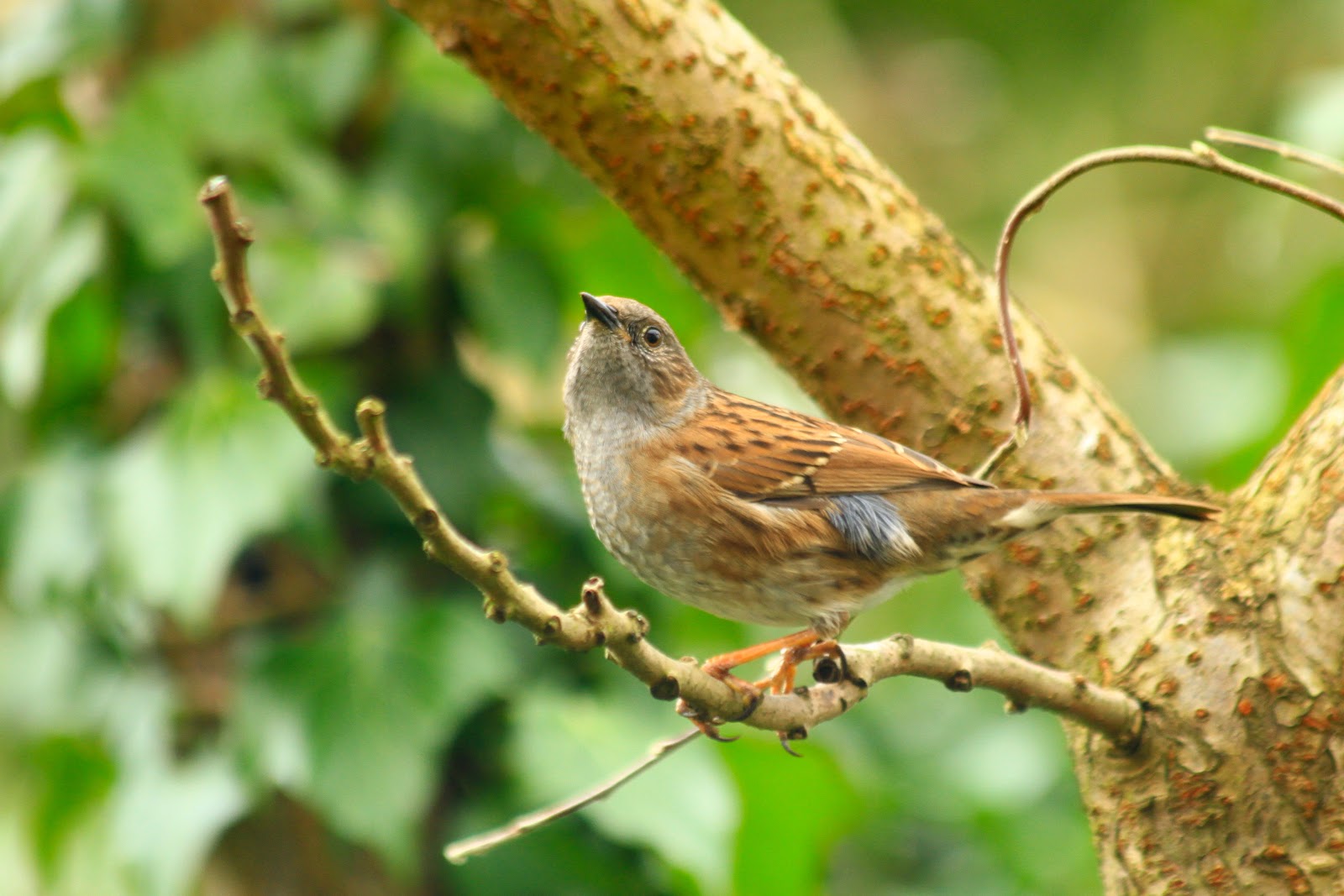
Dunnock

I have recently acquired a dead shrew, found in the field opposite my house. Rather than severe the flesh and head off and keep the skull, I decided to give taxidermy a proper go, using the kit and book Rachael and her family kindly bought me for christmas.... expect a gruesome blog to follow! 


Sunday, 23 December 2012

A little catch up, waxwing, and why you shouldn't give a damn if you don't see them...


It has been a long time since I last posted a blog, and a lot has happened. Here I will give a quick run down of a few highlights, before I talk about why you should get out and look for waxwing, and not give a damn whether you see them or not...


Back in August, I spent a week in Norfolk; highlights included avocet, bearded tit, osprey and migrating pink-footed geese at dusk… truly phenomenal, and I am not even the biggest goose fan!


Bearded tit


To come back from Norfolk, and to get an extremely grateful tip-off that the local kingfisher chicks had successfully fledged, I couldn’t resist sitting in the nettles for a few days watching them as they went from begging their parents for food, to attempting the odd dive of their own… with limited success!


Three days were spent living on a ship with the ‘twuly incwedible’ naturalist Chris Packham. Three days whale watching as a guide for ORCA, with the odd bit of bird watching thrown in, across the Bay of Biscay. There were fin whales galore, bottlenose dolphins, common and striped dolphins, as well as petrels and shearwaters.


An incredible sun halo, as the light refracted in the ice in the clouds, formed this circular rainbow-like ring around the sun.


Then to Wales with the family, where we were graced by the presence of powerful peregrines, agile choughs, and the cutest of grey seal pups.


Chough


Grey seal pup

I have been absolutely amazed by Wales, particularly Pembrokeshire, not dissimilar to the Devon coastline; the scenery and wildlife were stunning. The next time I was lucky enough to go to Wales was with Sale and Batman, where we wild camped in the New Forest and the Gower. Before being told our car had been clamped, and we had to pay £100 to get it removed. Only to be told it was a joke, but we had to leave anyway… 


Now, winter is here, and if you have any kind of keen interest in birds, you will be well aware of this year’s invasion of waxwing, as they move south from Scandinavia in search of food, their favourites being the bounty of berries on our trees and bushes. It is a particularly exceptional year for spotting these very handsome birds, with waxwing sightings in every county of England.

Everywhere I have been, I have looked for waxwing. There have been numerous local sightings, and yet, I haven’t seen a single one. I spent a whole weekend out walking in the hope of seeing a waxwing. I didn’t, and still haven’t, seen a waxwing. Instead, I had a great weekend walking in the countryside, and couldn’t care less about the waxwing. I walked from Langford to Biggleswade along the River Ivel. Along the way I saw redwing, another winter visitor, similar to the song thrush, except, as the name suggests, with a bright red blotch underneath their wings.


Redwing

A great spotted woodpecker flew across the river, black and white with its little red bum. Great spotted woodpeckers could have one of the greatest skull designs on the planet, with their shock absorbent tissue at the base of their skull enabling them to bang their little peckers at forces over 1,000 times that of gravity. A tiny goldcrest, the UKs smallest bird, with its drab green colouration, and bright golden crest running from front to back like some plump little punk rocker, bounced from branch to branch in the bushes.

Goldcrest

Rachael joined me in Broom lakes, where we wondered for a while, admiring the flock of lapwing, the wonderfully crested birds, with their large deep wings, before we drove around some car parks, staring at the bushes. Not seeing any waxwing.

The lesson to be learned here, is that watching wildlife isn’t about spotting that rare Scandinavian winter visitor, but simply getting out and enjoying each species for what they are, as each one is unique, and each in their own right is special. I would sooner watch the local kestrel hunt from telegraph wires, catching voles in its talons, carrying them off and tearing them apart in the nearby tree tops, than travel to the far end of the country to catch a fleeting glimpse of a little brown bird that was blown over from the US in a freak Atlantic storm, the first recorded in the country for over 25 years; the wildlife equivalent of train spotting. Its also highly likely, that after the exhausting trip across the Atlantic, the little brown bird will die not long after being recorded here.


My advice, go for a stroll on a nice sunny morning (or rainy morning for that matter), see what you can see, and enjoy the cuteness of the goldcrest, the awesomeness of the birds of prey, and everything in between.


Kestrel 

Or, if you are lazy, look out of your window, you could see one of these little cutie pies.


Blue tit