Beyond the Riverbank's full website: www.beyondtheriverbank.com
Showing posts with label River. Show all posts

Monday, 28 April 2014

Birthday, Norfolk and a Ratty Afternoon...


Once again, I find myself apologising for the lack of posts and the long period of silence. Poland seems like a very long time ago now. If you would like to see what has been important enough to fill my time since, please check out my Grey Seal film (if you have not already!) on my movie blog here: Three months later...


Spring has almost finished springing. The song thrush sings at the top of the conifer in the churchyard from daybreak. What a sound. Bluebells have already started carpeting the woodland around Whipsnade and the Chilterns. And I have seen plenty of swallows, martins and yellow wagtails already. Awaiting for the sound of screaming swifts as they spend their days racing through the air.

Thinking back to February, I will start with my birthday. My old man, Grandad and sister donned their wellies and boots. Sky led the pack, keeping ears and eyes peeled for rabbits and squirrels along the way. 

Lost already

Keeping watch on our tea break at the quaint little farm house tea shop.

What was a grey, cold bleak start to the day, soon transformed into a gloriously spring afternoon. Like the spearheads of a roman legion, the daffodils break through the graveyard soil at St Peters Church. There is a particularly enjoyable atmosphere in church and grave yards. To be surrounded by the headstones of the deceased, brings you into touch with life, and as they are usually well kept, they almost act as a small reserve for nature, having green woodpeckers, kestrels, tits, robins and blackbirds nesting in my local cemetery. I like the juxtaposition of life being created in place where the late have been laid to rest. 

Brightening up at St. Peters Church

Daffodils by the tombstone

To be out in the fresh air, with some of the people that mean the most to me, was a great way to spend a pleasantly quiet birthday. Back home, I grab a rare opportunity to enjoy the sun on the Ivel. 


The Ivel

Wind in the reeds

Sunlight on the river

March. And I join my Sister and Dad at Wells-Next-Sea. A walk along the sea front. Fields and marshes to my left, the running tide of the estuary to my right. The sweet evocative call of the Curlew that forages in the mud. Turnstone camouflaged into the muddy pebbled shoreline. Oystercatchers delve their bright red and orange bills into the soft mud in search of food. Their bills stand out in contrast to their black and white pied plumage. 

Wells-next-sea

Curlew

A walk around Holkham. The pine forest backs the dunes, and the vast wind-swept beaches are lapped by the North Sea. During our walk, birds of prey abound! First a kestrel hovers, head motionless and fixed on the grassy fields below. A red kite soars in the wind, its forked tail twisting and turning to keep it balanced. A high pitched call draws my attention to a buzzard circling high above. A smaller bird of prey zips past the buzzard. A peregrine! I cannot believe my luck, the fastest animal on the planet, able to reach 200mph in a stoop. And as we made our way to the edge of the wood, and out onto the sand dunes, a deep winged marsh harrier quartered across the marshes and over the dunes and out of sight.


Lapwing or Peewit. A beautifully exotic looking bird

Red kite in flight

Norfolk sands and sea

The dunes filled with rabbit burrows. We sat and ate lunch from the top of a dune, spitting the grains of sand blown into the mugs of tea we poured, and watched as hares made their way through their runs and back finding safety in large patches of undergrowth.


Grainy tea and sandy sandwiches

A visit to Maidstone in Kent during the floods ruined a walk along the river. The banks had burst and the path was completely submerged. A kayak, tilted onto its side, was wedged into the trees. Swans gracefully swam past the tops of benches. Bin openings peered out from the swollen river around the graveyard.

Swan by the bench

A pigeon, dead, hangs upside down in the tree above, adding to the drama. 
This all a reminder of the power of nature, its unpredictability and the fact that humans are definitely not above it. Our immediate reaction is to work against it and fight a battle we will never win. More concrete flood defences, drained and dredged rivers. Surely finding natural ways to buffer such incidents must be more beneficial to more than just humans. If you build houses on a floodplain, or a town along the banks of a channelised river, with no room for expanse, there is going to be a chance of flooding. I sympathise with those greatly effected, but I think it should not come as such a surprise when it happens.


I then ventured on a walk through West Malling. Quite nice as towns go, but soon found myself photographing a wonderful pair of brown rat along the ditches in the park. Charismatic, intelligent and well adapted, these non-natives thrive in these habitats.


And here is a little film I made following the rat from its burrow, foraging in the stream, and back to its burrow. Check it out if you have not already !


I hope all readers are well! Thank you for reading, and I hope I will be blogging about more adventures more frequently now the weather has picked up and I have some exciting plans in place.

Thank ya'll!

Tom

Tuesday, 12 November 2013

Scotland, Part II: Forest, Whiskey and a Salmon


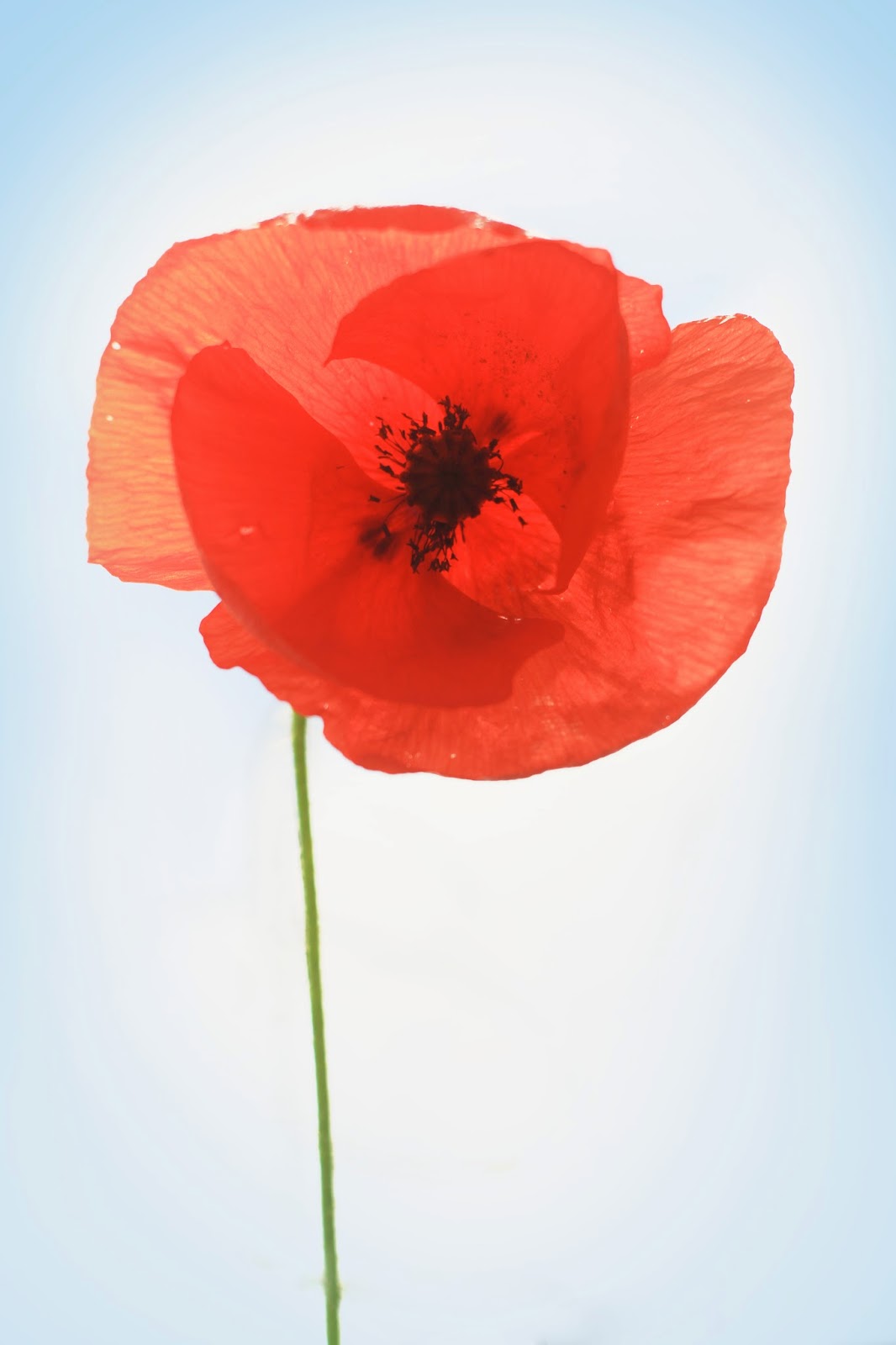
It has taken me a long while to get around to part two of this amazing trip. I am working on a few other projects at the moment, which means the blogs may be slightly less frequent. This blog begins with a photo of a poppy, in honour of Remembrance Sunday and Armistice Day.


Woodland and Edradour

The sound of birdsong woke me at around six in the morning. The melodic and flutey tones of the blackbird and the chirpy song of the robin, backed by the sweet sound of tits calling as they made their way through the branches. I opened my window to the damp and cool forest air and let it drift into my room. It was time for an early morning walk up the mountainside into the pine forest that surrounds our camp.

Boulder in the Forest

Droplets of drizzle precariously clung to the sharp, needle-like leaves of the pine trees. Fungi burst through the undergrowth and the rotting remains of wood, as they attempt to spread their spores across the forest. 


A floor of fungi

The forest felt peaceful. I caught a glimpse of two red deer hinds as they momentarily froze upon discovering Sky and myself clambering our way through the forest. They soon dashed off through the clearing far quicker than I could ever follow.

Back for an early lunch, before heading off to a distillery. In fact, potentially the worlds smallest legal whiskey distillery - Edradour. For an afternoon of learning and drinking. We are in Scotland after all...

Barrels of whiskey!

Prepare for some number-crunching statistics!

Amazingly, Edradour make in one year what Glenfiddich make in just three days. Despite this, Edradour still use 6,000 litres of water per day. If these stats are correct, and my math holds out, after a quick calculation, Glenfiddich would use around 730,000 litres of water a day. This is equivalent to 266,450,000 litres of water every year. I will repeat that; that is over two hundred and sixty six million litres of water. A year. For whiskey. That is enough water to make over 100,000 kg of rice a year. And that is just Glenfiddich. It really does make you wonder about the state of the world we live in. Of course, they did not elaborate on their use of water resources in quite so much detail on the tour.


Tummel Valley

We had a slow start to the next day. And planned to climb the nearest peak from our camp. We got ready and steadily made our way up through the mixed broadleaf woodland, fungi littering every corner of the damp forest floor.


Early autumnal woodland

We decided to go off the beaten track in an attempt to make it to the peak. In doing so, we were rewarded with incredible views of what felt like a prehistoric forest, and squelched through clearings glistening with soggy mosses, small oozing streams, rich green grasses tipped with golden brown blades and the pink and purple flowers of the heather. A fair few of what looked to be fox moth caterpillars, fed among the heather.
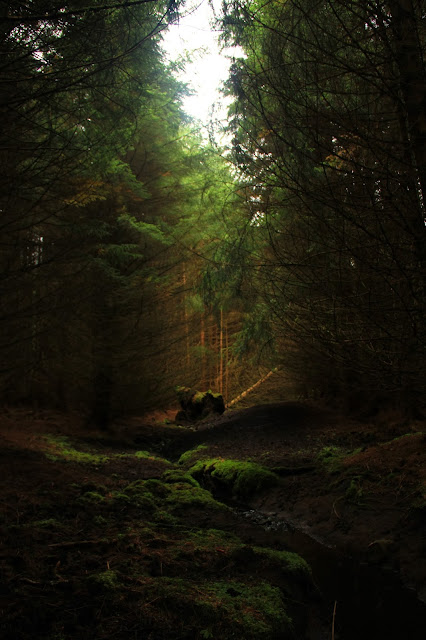
How I imagine the Jurassic period to have looked (maybe with less regiment to the trees)

Fox moth caterpillar (?)


Fungi even grew from the branches of trees. Incredible

 Sky at the highest point this side of the valley

 As a result of our venture into unexplored and unpaved lands, we were inundated with a small parasite - the tic. I first felt an itching sensation just under my belly button. And sure enough, upon inspection, a small black body sat with its head buried into my skin and its legs waving in the air. The dogs were riddled with them too. A couple of quick phone calls to good friends Dr. Ripley and Timmy P (thanks guys!), gave me the confidence to handle the situation. Funny enough, the tic decided to make its own way out of my stomach and started crawling around, so I removed it and carried on with the walk. As far as I am aware, that is the first time I have ever been parasitised.


Pitlochry

Before heading home, we visited Pitlochry. And we had our first red squirrel sighting of the entire trip, as the little rodent sat by the side of the road collecting food. Where the loch has been dammed, they have built a fish ladder, enabling the salmon to make their way up and around the dam. A brilliant idea and one I was intrigued by. Over 1,000 salmon had been through the ladder that year, and we were lucky enough to see one half way up the ladder in the  viewing window. Beautiful fish. 

River Tummel

Terrible salmon photo! 

Any river good for fish, is going to be good for fishing predators. A heron sat on the opposite side of the River Tummel, watching the river as it flowed past. 

Heron on the rocks

The journey home was a long one. In terms of wildlife, I did not manage to see any of the Scottish big five properly, but I had an incredible time, and got to enjoy a taste of this beautifully vast landscape. I will end the blog of the trip with my personal favourite photo. It is of Sky, half way up Ben Nevis. Looking down in the hope of spotting sheep...

Halfway up, looking down

I mentioned at the start of this post about some new projects I am working on.  I have decided to take a new direction into territory that I have no proper experience in whatsoever. All will be revealed soon for those that are interested! 

One final photo: A shy hedgehog feeding in the garden behind the old empty plant pots, as it attempts to fatten itself up for the hibernation ahead...


Hedgehog

Thank ya'll for taking time out of your lives to read the blog, or simply look at the photos. 

Until next time! 

Sunday, 10 March 2013

Shifting weather, yellowhammer and a confluence of rivers


For a moment, for a day or two, it felt like the transition into the season of spring had begun. Temperatures had risen, clouds gave way to blue skies, and people were even down to their t-shirts. And now the days are noticeably longer, drawn out as the planet's orbit moves us around the sun, holding the Northern hemisphere closer to our solar system's star. The reeds bordering the river glow golden, catching the light as they gently sway in the wind.

Golden reeds blown in the breeze

Last years cygnet, now with its own territory, stands proud in front of the setting sunlight

Venturing further afield, Joey, Sky and Pa joined me for a stroll by the confluence of the Ivel and the Great Ouse. Where the modest yet mystic river I grew up on joins this leviathan of a river; the fourth longest river in the United Kingdom at 143 miles from its source to the mouth at the Wash.


The River Ivel, on the right, joins the Great Ouse on the left

Roxton Lock

Looking back up the two rivers; The Ivel to the left, and Great Ouse to the right

Walking home from my Nan and Grandads after dropping off some birthday presents, the sun set over Fairfield as I crossed the fields with Sky and Haz back into Stotfold. The hedgerows flutter with brilliantly bright yellow birds, showing off their pure white tail bars as they flee further along the hedgerows upon our approach. The yellowhammers call 'cick' repetitively, usually ending in a high-pitched, slightly electronic 'tee' sound. As the males get older, their heads become a brighter yellow in colour, with fewer striations. Females leave the males to the fanciful colours, and appear far more drab with a greater amount of darker streaks, obscuring the yellow plumage. 


The sun goes down over Fairfield

Yellowhammer; another example of the wonderfully exotic coloured birds we have here in the UK

The sun's final moments before the Earth rotates us away 

A fond farewell for another day; gloriously coloured skies


Now it is cold again. Only five days ago, people were hot and bothered wearing only t-shirts. And, hopefully, some form of clothing from their waist down as well. And now the hats, scarves and gloves are back on again. Snow fell today. Yesterday, the bitter winds kept my hands in my pockets for most of the 13 mile Uncle/Nephew walk to Shefford and back along the Navigators Way, where I took this panoramic in preparation for the wind turbines being built behind our back gardens in Langford. If I am honest - I can not wait to compare the before and afters!


The fields of Langford; soon to be the site of the closest wind farm to a village in the UK

A token, winking photo of Sky...

On the 1st of March, the BBC released a story reporting that 100 million Sharks are killed annually, with the major driving force being the demand for shark fin soup in China. The act of finning has to be one of the most inhumane treatment of an animal I have ever heard of. To dispose of a finless carcass still alive, to sink and painfully drown on the seabed. It has to be up there with the live skinning of animals for the fur trade.

Quality of data remains uncertain, but what is beyond a shadow of a doubt is the fact that these animals are being caught and killed at insanely unsustainable rates, for totally pointless and selfish reasons. I particularly like the quote from Ding Liguo:

"Materialism is well developed in China but other things, such as morality, haven't progressed so well"

Friday, 22 February 2013

Signs of Spring, a Barn Owl, and the Skinless Shrew...


I lay in bed thinking. The half moon glows through the open curtains, faintly lighting my room. I wonder whether the great hunter has had any success since our meeting a few hours before. I wonder if it is still quartering the fields, perfectly focusing its senses onto finding its prey. Its deep steady wing beats as it silently moves through the air. Suddenly, the owl banks, spreading its wings. It sweeps sideways and plummets into the reedy undergrowth. Effortlessly, it lifts itself up, with a small mammal hanging in the grasp of its talons. There is something magic about the Barn Owl. I stumbled across one whilst I walked with Ellie at dusk earlier in the day. Initially, I had been enjoying the partial cloud cover, as the setting sun lit their undersides with pale pinks and deep oranges. The air was still. And the scent of river water hung in the air. 

The sun begins to set over the Ivel

Hanging over the River

And then, the Barn Owl. Impossible to miss; with their huge wingspan, bright white and a steady flight. I caught a glimpse as it dived for prey. Missing after its first attempt, the owl took a second dive only seconds after its first. Its moments like this where the excitement, adrenalin and pure joy at such an encounter takes over. I crouched myself into the ditch, no longer worrying what people might think coming across a man crouched in the reeds, and watched as the owl turned and flew straight towards me. I can be fairly self-conscious sometimes, especially nowadays. It can not always look good, creeping around bushes with a camera in hand. Thoughts of having my photo library searched by police to prove that I was not photographing the school kids in the playground, but instead the charms of goldfinch feeding in the hedgerows, occasionally happen. My mind digresses, as it often does.

The Barn Owl after two unsuccessful dives

The owl then crossed the river, and disappeared beyond the woodland. Continuing on its quest to sustain its bodies energy demands. Later on, from the ditch beside the track, no more than three or four feet away, the owl lifted itself up and flew away, before turning across the field and, once again, disappearing into the diminishing light. Incredibly, a Barn Owls sense of hearing is so good, that they can catch small prey in total darkness, without the need for their vision (which also happens to be excellent as well). One ear is positioned slightly higher than the other, a bit like Sloth from the Goonies, to enable them to pinpoint sounds exactly. Although, I do not think Sloth benefited in the same way...

Into dusk

Hunting at dusk, under the watchful eye of the Moon - about 384,000 km away

Snowdrops. Or snow piercers as they are known in France. A sign that spring is soon to be arriving here in the UK. Mistakenly thought to be British, these flowers are non-native invaders, thought to have been brought over from mainland Europe in the sixteenth century.


Piercing their way through the Earth
Like an army of small spears, the flowering stalks grow upright in clusters spread across woodland floor.

Drops of 'snow'

Eventually, the flower heads open up and drop. Hanging in a sober fashion, they carpet the woodland floor with bright white. And, despite being non-native, they are a very attractive plant that lifts the British spirit. They are a sign of brighter, warmer and longer days, with an air filled with the sex driven sound of bird song. Already excited!
This woodland has been well and truly pierced

Making the most of the recent sunny weather, here are a couple of shots walking in the river with Sky...

Trying to hunt moorhen, like something out of The Deliverance...

Light on the river
The Barn Owl seems to be reliably hunting the same patch, and I hope to return in the days to come. I promised some photos of the taxidermy effort of the shrew I found whilst walking Sky. Instead of posting them here, I have decided to dedicate this blog to all things wild and alive; and all things dead and taxidermy here:  http://tomstaxidermy.blogspot.co.uk/.

Also, it was National Nest Box Week recently. Check out the website http://www.bto.org/nnbw/index.htm, and give some birds a safe place to lay some eggs this year !