Beyond the Riverbank's full website: www.beyondtheriverbank.com

Friday, 22 February 2013

Signs of Spring, a Barn Owl, and the Skinless Shrew...


I lay in bed thinking. The half moon glows through the open curtains, faintly lighting my room. I wonder whether the great hunter has had any success since our meeting a few hours before. I wonder if it is still quartering the fields, perfectly focusing its senses onto finding its prey. Its deep steady wing beats as it silently moves through the air. Suddenly, the owl banks, spreading its wings. It sweeps sideways and plummets into the reedy undergrowth. Effortlessly, it lifts itself up, with a small mammal hanging in the grasp of its talons. There is something magic about the Barn Owl. I stumbled across one whilst I walked with Ellie at dusk earlier in the day. Initially, I had been enjoying the partial cloud cover, as the setting sun lit their undersides with pale pinks and deep oranges. The air was still. And the scent of river water hung in the air. 

The sun begins to set over the Ivel

Hanging over the River

And then, the Barn Owl. Impossible to miss; with their huge wingspan, bright white and a steady flight. I caught a glimpse as it dived for prey. Missing after its first attempt, the owl took a second dive only seconds after its first. Its moments like this where the excitement, adrenalin and pure joy at such an encounter takes over. I crouched myself into the ditch, no longer worrying what people might think coming across a man crouched in the reeds, and watched as the owl turned and flew straight towards me. I can be fairly self-conscious sometimes, especially nowadays. It can not always look good, creeping around bushes with a camera in hand. Thoughts of having my photo library searched by police to prove that I was not photographing the school kids in the playground, but instead the charms of goldfinch feeding in the hedgerows, occasionally happen. My mind digresses, as it often does.

The Barn Owl after two unsuccessful dives

The owl then crossed the river, and disappeared beyond the woodland. Continuing on its quest to sustain its bodies energy demands. Later on, from the ditch beside the track, no more than three or four feet away, the owl lifted itself up and flew away, before turning across the field and, once again, disappearing into the diminishing light. Incredibly, a Barn Owls sense of hearing is so good, that they can catch small prey in total darkness, without the need for their vision (which also happens to be excellent as well). One ear is positioned slightly higher than the other, a bit like Sloth from the Goonies, to enable them to pinpoint sounds exactly. Although, I do not think Sloth benefited in the same way...

Into dusk

Hunting at dusk, under the watchful eye of the Moon - about 384,000 km away

Snowdrops. Or snow piercers as they are known in France. A sign that spring is soon to be arriving here in the UK. Mistakenly thought to be British, these flowers are non-native invaders, thought to have been brought over from mainland Europe in the sixteenth century.


Piercing their way through the Earth
Like an army of small spears, the flowering stalks grow upright in clusters spread across woodland floor.

Drops of 'snow'

Eventually, the flower heads open up and drop. Hanging in a sober fashion, they carpet the woodland floor with bright white. And, despite being non-native, they are a very attractive plant that lifts the British spirit. They are a sign of brighter, warmer and longer days, with an air filled with the sex driven sound of bird song. Already excited!
This woodland has been well and truly pierced

Making the most of the recent sunny weather, here are a couple of shots walking in the river with Sky...

Trying to hunt moorhen, like something out of The Deliverance...

Light on the river
The Barn Owl seems to be reliably hunting the same patch, and I hope to return in the days to come. I promised some photos of the taxidermy effort of the shrew I found whilst walking Sky. Instead of posting them here, I have decided to dedicate this blog to all things wild and alive; and all things dead and taxidermy here:  http://tomstaxidermy.blogspot.co.uk/.

Also, it was National Nest Box Week recently. Check out the website http://www.bto.org/nnbw/index.htm, and give some birds a safe place to lay some eggs this year !


Friday, 1 February 2013

A frozen landscape and feeding the birds...


The New Year saw temperatures drop dramatically all over the country. Which meant one thing… stand still! Lots of people cannot cope, while lots of people get over-excited (mostly kids, or the kids that never grew up), and others moan in the great British negative manner we all seem to thrive on. But how many people stopped, and took a moment to appreciate exactly what it was that coated our landscape? And what about the field voles? The owls?  The hibernating insects?

River Ivel, Langford
Passing through the now transformed concrete jungle. Roads of tarmac, curbs and bricks and mortar. Now frozen. So what was dull, grey and lifeless, now gripped by haw frost. Like sweeping all of the damage we have done to the environment for the benefit of our own kind under a carpet of pure, white snow. Places I would normally detest suddenly look beautiful. Hidden under a cloak of bright white. The snow continued to fall all over the country. Each flake as unique as the people on our planet, individual in shape and form.


Frozen Barbed Wire

Food for the birds is vital in this cold and ice. Finding natural food stuff in such wintery conditions is difficult. A great time to get some close views of garden birds, as they are drawn in to the food and water readily available in our gardens.

Blackbird in the Snow

The first Uncle-Nephew long walk of the New Year, took us on a 14 mile stroll from Langford, through Broom and out to Shuttleworth, looping back around along part of the Ivel Navigation. Probably the most exciting thing about the snow for me, is the tracks left behind by animals. Fox prints, muntjac, birds of all sizes. The slightly longer print of the blackbird, as it makes its way out from the hedgerow. Taking to the air, its wings brush against the surface of the snow, leaving the perfect spread of wing feathers at the end of the track.

Inconspicuously amongst the branch of the deep green fir tree. Occasionally showing itself as it bounced between branches, to hunt for its favored food types of small insects. The soft olive plumage and bright golden yellow crest make the goldcrest a gem among birds. Holding the record as Britain's smallest bird. Momentarily, we were shadowed by the incredible raptor, the red kite. As it soared between the firs, twisting its forked tail, so to give an effortless impression. 

The cold weather seems to give animals that extra bit of courage and boldness, necessary as they become ever more desperate to survive the extreme cold. It takes a lot of energy to keep warm, energy that needs replacing with more food. Some of my most enjoyable encounters with kingfishers have been during the winter months, when lakes have turned to ice, and frost and snow grips the yellow lichen coated branches overhanging the river. This walk was one of these moments. All the kingfisher could care about was catching its next meal. Finding the perch. Eyeing up the fish. Calculating dive speed and direction. And plunging into the slow flowing river Ivel, pulling an unwary stickleback from the water. Even the dogs didn't bother the bird, as we followed and watched from a few yards away, diving and feeding, time and time again. 


Kingfisher after catching a Fish

Flying to its next perch

Having the friday afternoon off of work meant the three generations, Granddad, dad, and I, could get out and take in what remained of the snow before the rain and floods set in. 


Tree in the Snow

Looking down over Pirton

Sky living it up!

Even though the snow has cleared, it is never too late to start to feed the garden birds regularly. My mum hasn't had food in her feeders for most of the year, until this month. And after two weeks, I counted three great tits, three robins, two blackbirds, song thrush, two blue tits, four sparrows and a dunnock, all within the space of an hour. Also, if you fancy putting some nest boxes up, now is a good time - try the RSPB site for advice on sizes and placement - http://www.rspb.org.uk/advice/helpingbirds/nestboxes/smallbirds/index.aspx - Birds can be fussy! 


One of four sparrows

Robin

Great Tit
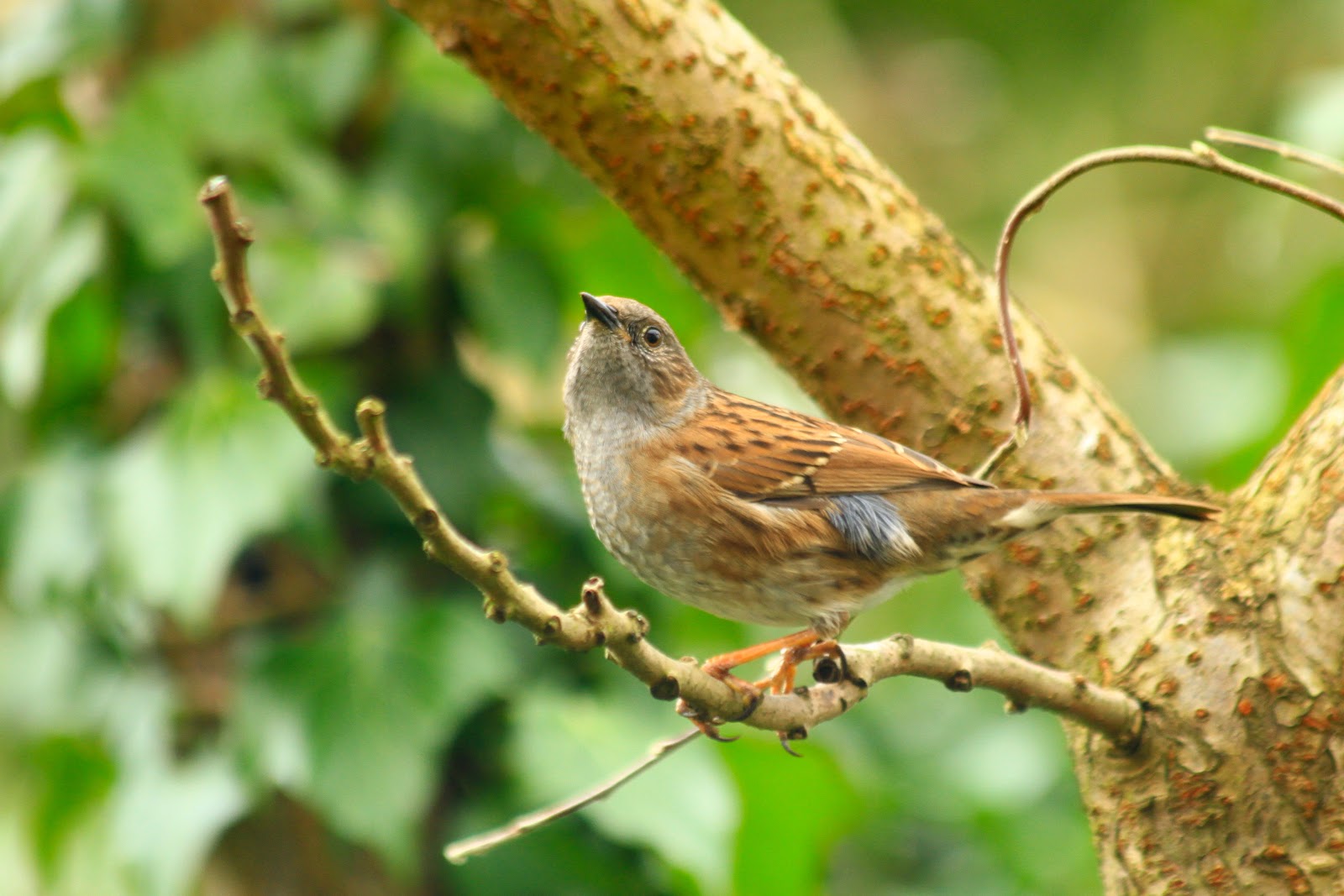
Dunnock

I have recently acquired a dead shrew, found in the field opposite my house. Rather than severe the flesh and head off and keep the skull, I decided to give taxidermy a proper go, using the kit and book Rachael and her family kindly bought me for christmas.... expect a gruesome blog to follow! 


Sunday, 23 December 2012

A little catch up, waxwing, and why you shouldn't give a damn if you don't see them...


It has been a long time since I last posted a blog, and a lot has happened. Here I will give a quick run down of a few highlights, before I talk about why you should get out and look for waxwing, and not give a damn whether you see them or not...


Back in August, I spent a week in Norfolk; highlights included avocet, bearded tit, osprey and migrating pink-footed geese at dusk… truly phenomenal, and I am not even the biggest goose fan!


Bearded tit


To come back from Norfolk, and to get an extremely grateful tip-off that the local kingfisher chicks had successfully fledged, I couldn’t resist sitting in the nettles for a few days watching them as they went from begging their parents for food, to attempting the odd dive of their own… with limited success!


Three days were spent living on a ship with the ‘twuly incwedible’ naturalist Chris Packham. Three days whale watching as a guide for ORCA, with the odd bit of bird watching thrown in, across the Bay of Biscay. There were fin whales galore, bottlenose dolphins, common and striped dolphins, as well as petrels and shearwaters.


An incredible sun halo, as the light refracted in the ice in the clouds, formed this circular rainbow-like ring around the sun.


Then to Wales with the family, where we were graced by the presence of powerful peregrines, agile choughs, and the cutest of grey seal pups.


Chough


Grey seal pup

I have been absolutely amazed by Wales, particularly Pembrokeshire, not dissimilar to the Devon coastline; the scenery and wildlife were stunning. The next time I was lucky enough to go to Wales was with Sale and Batman, where we wild camped in the New Forest and the Gower. Before being told our car had been clamped, and we had to pay £100 to get it removed. Only to be told it was a joke, but we had to leave anyway… 


Now, winter is here, and if you have any kind of keen interest in birds, you will be well aware of this year’s invasion of waxwing, as they move south from Scandinavia in search of food, their favourites being the bounty of berries on our trees and bushes. It is a particularly exceptional year for spotting these very handsome birds, with waxwing sightings in every county of England.

Everywhere I have been, I have looked for waxwing. There have been numerous local sightings, and yet, I haven’t seen a single one. I spent a whole weekend out walking in the hope of seeing a waxwing. I didn’t, and still haven’t, seen a waxwing. Instead, I had a great weekend walking in the countryside, and couldn’t care less about the waxwing. I walked from Langford to Biggleswade along the River Ivel. Along the way I saw redwing, another winter visitor, similar to the song thrush, except, as the name suggests, with a bright red blotch underneath their wings.


Redwing

A great spotted woodpecker flew across the river, black and white with its little red bum. Great spotted woodpeckers could have one of the greatest skull designs on the planet, with their shock absorbent tissue at the base of their skull enabling them to bang their little peckers at forces over 1,000 times that of gravity. A tiny goldcrest, the UKs smallest bird, with its drab green colouration, and bright golden crest running from front to back like some plump little punk rocker, bounced from branch to branch in the bushes.

Goldcrest

Rachael joined me in Broom lakes, where we wondered for a while, admiring the flock of lapwing, the wonderfully crested birds, with their large deep wings, before we drove around some car parks, staring at the bushes. Not seeing any waxwing.

The lesson to be learned here, is that watching wildlife isn’t about spotting that rare Scandinavian winter visitor, but simply getting out and enjoying each species for what they are, as each one is unique, and each in their own right is special. I would sooner watch the local kestrel hunt from telegraph wires, catching voles in its talons, carrying them off and tearing them apart in the nearby tree tops, than travel to the far end of the country to catch a fleeting glimpse of a little brown bird that was blown over from the US in a freak Atlantic storm, the first recorded in the country for over 25 years; the wildlife equivalent of train spotting. Its also highly likely, that after the exhausting trip across the Atlantic, the little brown bird will die not long after being recorded here.


My advice, go for a stroll on a nice sunny morning (or rainy morning for that matter), see what you can see, and enjoy the cuteness of the goldcrest, the awesomeness of the birds of prey, and everything in between.


Kestrel 

Or, if you are lazy, look out of your window, you could see one of these little cutie pies.


Blue tit

Friday, 26 October 2012

Kayaking the Ivel and Ouse: Part III


“The architecture of geology holds for us mere humans some of the greatest stimuli in our lives. Rivers and waterfalls, along with mountains, have the greatest impact. For those of us who are impressed with these things, and we are legion, it is a lifetime love affair. There is an irresistible urge to stop at any spot where there is moving water.” Tony Wilkinson, 2005

For me, I would have to include the sea and the Earths great oceans, as well as rivers, waterfalls and mountains. Although it is quite appropriate to find a quote about rivers, whilst writing a blog about a kayak trip from a rivers source, to the mouth where it meets the sea.


Day 4 
Lazy Otter - Denver Sluice

It had turned out, that we had set up camp on the edge of a marsh next to the riverbank. Luckily for us, we hadn’t had too much rain during the night, and were awoken by the glorious sunshine.


Catching some early morning rays


We knew we had to make good time today, and were going to reward ourselves with a quick stroll around Ely for lunch… If we made it on time! This part of the river continued in its sterile fashion. Wide and surprisingly slow flowing. The riverbanks dominated by the pontoons and barriers for the numerous barges and boats that travelled up and down these parts of the river.

Apart from the odd wren and warbler in the reeds, and swan families foraging along the banks, the wildlife was few and far between. Another factor that contributed to this barren feeling was the fact that we were passing through the Great Fens. The surrounding land was flat, and dominated by irrigated fields. Fascinating how they came about, as the same man that designed drainage ditches of Netherlands, designed the thousand drainage ditches here in Norfolk, helping to keep the Fens a dry place. A feat that has taken over 2,000 years to accomplish!

The river felt long, wide, and each and every meander opened up another stretch of river, just as long as the last, just as wide, and just as seemingly sterile. But it is exactly for this reason that this part of the river has been used for centuries as a busy transport route, being used since long before the Romans. A welcoming sight around one of the long meanders… Ely Cathedral!


Ely!


Soon enough, we were coming into Ely, with a newfound determination, and inspiration. Grey clouds and light rain peppered across the grand skyscape. A cormorant, sleeping in the top of an old tree on the riverbank, lifted its head briefly as two red kayaks passed underneath.


Cormorant in the Tree


I was going to put a photo of Dad and I standing on the bridge looking back down the river in the centre of Ely, but I look like I am riding a rodeo, with my floppy hat and one hand above my head for some reason… I am starting to understand why my old man calls me a moron sometimes! Instead, here we are standing by the Eel of Ely…


The Eel of Ely!


The city’s name is thought to have derived from the incredible animal itself, the Eel. Eels are fascinating animals, having quite the complex life. These animals will live and feed in our rivers until they are about 10 years old, when they undertake one of the greatest migrations on the planet. On dark and moonless nights (my least favorite kind) mature eels make a one-way journey across the Atlantic Ocean, over 3,000 miles to the Sargasso Sea. Here they will breed, and young eels, called elvers, make the return journey back to our rivers to grow. So not only will they complete a 6,000 odd mile round trip in their life time, they will adapt from life in saline water, to freshwater, and back to saline water. In the words of Chris Packham… ‘Twuly Incwedible!’


Inside Ely Cathedral


The cathedral is a far more anthropogenic wonder. A flying visit into the entrance, a quick chat with the holy lady about the cost of weddings in the cathedral (not that either of us plan on any form of wedding, let alone a wedding in this place!), and back out of the entrance to grab some lunch and get back on the water.

Loaded with more Mentos, we hit the river for a good three hours. We made good distance, but found the mental challenge of withstanding the burn of kayaking constantly, and watching what appeared to be a never-ending cycle of the same reeds and riverbank passing by, over and over, a difficult one to deal with. This stretch was called the Ten Mile Bank. Which to me, appears to mean ten miles of the same riverbank. We tried singing, which made me frown slightly less than I already was, but yet again, Mentos came to the rescue when we stopped on the banks of The Ship pub. The bursts of fruity flavor, as you suck and chew on the chewee dragues. Ahhh, I will never look at them in the same way again.


The Red Swan


I had found a swan’s feather, and christened the kayak the ‘Red Swan’. Dad opted for ‘Sky Bus’ for his. This is what our conversation and thought processes had come to.

The sky gradually cleared in places, and the river started to become a lot more interesting the closer we got to Denver Sluice. Trees were once again over-hanging the river; kingfishers were darting below the branches, swan families, coots and moorhens in the reeds.


Quite a tranquil part of the river


A mirror calm surface to the water, a still in the air, and the sun dropping down gave us the opportunity to enjoy the surroundings, appreciate the peace, tranquility and halcyon river. The sound of our paddles smoothly breaking the surface, as drips blemished the glassy surface, and we left nothing but the wake behind us.


Sky Bus


A barn owl quartering across the fens to our right, flew directly across the river in front of us. The reflection of its deep beating wings perfect in the water beneath, golden in the late sunlight.

Around the next bend… Denver Sluice!! The joy was phenomenal. It had felt like the finish line. Particularly as this was the end of the freshwater river, and beyond was the tidally influenced estuary. We knew the next day would be a short, but hard push to the actual finish line. But for me, with the perfect scenery, the end of a mixed day with ups and downs, and the fact this was the true end of the freshwater we had been travelling on for the past four days, this felt like the victory I had hoped for.


Denver Sluice


The Setting Sun


Now to find a part of the riverbank that wasn’t plagued with vicious and deadly ponies, so we could set up camp.

We watched from camp as rain clouds closed in onto us, obscuring the sunset. We fell asleep to the sound of rain beating down onto the canvas of our tent. I was just thankful that we would not have to endure another night of Ainsley Harriots pre-packed boil in a pan cous cous. Even Sky longed for her dry, solid biscuit food from home.


Looking out from the safety of our tent...


Day 5
Denver Sluice - Finish!!!

This was our last day kayaking. We made the mistake of deciding to kayak on the Relief Channel, to prevent getting caught in any tides that we were unsure of. This meant the river was long, wide and very straight. We passed Downham Market and finally made it to Saddle Bow, just on the outskirts of Kings Lynn. The day was dull, grey and very dank. A bit like the deflated feeling of not being able to get out and down past the lock at the end of the channel and get into Kings Lynn.


Sky Bus approaching the lock


After the elations of last night, this could not feel like more of a let down. A fisherman, who was fishing from the banks of the power plant situated here, greeted us. He was not supposed to be there. After approaching the lock gate too closely, we were obviously not supposed to be there either, as an announcement was made over the speakers, warning us to exit. The fisherman did not care in the slightest that we had just finished a kayak trip about 86 miles long.

“What made yew do that?”

Good point.


The end of the river!


Anyway, we had finished, exited on the slipway to the power plant, and carried for the last time to the road, where, after a few issues with dads phone, a trip to the police station and a convenience store, Grandad and Uncle Bolla picked us up.


The beautiful ending


All in all, the trip was incredible. It is just a real shame the end of our kayak trip, on a gloriously wild, seemingly peaceful and wonderfully diverse river, ended on the road outside of a power plant in Kings Lynn.

I will pretend it ended at Denver Sluice, and the fifth day never happened…


Thank you all for reading, I hope you have enjoyed, I shall end with a photo of the incredible wake of a Grass Snake on the Ivel.  There is also an extra special treat on the way (hopefully within the next week) of a video clip that I am sure you will all enjoy as much as I enjoyed filming it…


Tuesday, 28 August 2012

Kayaking the Ivel and Ouse: Part II


“On watching a gamboling fox cub, a fawn, an ocelot, a marten, or even a well-furred pet skunk, one is apt to be carried away and declare each in turn the most beautiful and graceful creature ever seen. But when all are gone from view, when nothing but the dim impression remains it is the otter that stands out pre-eminently as the most beautiful and engaging of all pets.” Ernest Seton, 1926

I came across the above quote whilst doing some recent research about Otters.  I have never seen an Ocelot, Marten or even a well-furred pet Skunk, but I have glimpsed an Otter, and will forever remember…

Day 2
Tempsford - Huntingdon

To say we slept well would be lying. We were both tired, and had fallen to sleep almost instantaneously. But the cold soon crept in, and the ground seemed to get harder and lumpier as the night went on.  


Early morning tea

Luckily, a glorious morning welcomed us as we boiled the kettle for a mug of tea and ate our rations of cereal bars. Already Dragonflies skimmed across the surface of the water, and Butterflies flurried over the field after their thermal recharge from the early-morning sun.


Converging with the River Great Ouse

What a beautiful morning to be on the river. We cornered the first meander and carried past a weir, before hitting the River Great Ouse at Roxton Lock.

Roxton Lock

Here, the river considerably widened. Lush green woodland on either side of the river towered over us, almost like we were cutting through a hidden corridor of wildlife. The sound of our paddles cutting through the crystal calm water, as we glided over the glassy surface, added to the tranquility and beauty of the journey. The long-distant humming of traffic on the main roads was the only reminder of the modern, busy world.


Cutting through the woodland

A Buzzard called in its mewing manner from the top of an old dead tree. It’s a comforting sound that can lift the spirits. Birds of prey have certain awe about them, with their perfect adaptations to a life on the wing, hunting with precision and power, and occasionally scavenging when the opportunity arises. Buzzards have really bounced back from the slaughter and destruction of populations in the past well, now thriving all over the country, replacing Kestrels as the most common birds of prey.


Another photo of this amazingly peaceful part of the journey

The pace was a steady one, as we made good progress throughout the day. We were extremely relieved not to have to get out and carry our kayaks as we joined another boat in our first lock. Quite a crowd gathered to watch two kayakers, with their dog, in the lock just outside of St. Neots. The guys on the boat chatted to us for a while, and invited us to join them at their mooring in St. Neots so we could nip into town to fill up our water bottles (and have a quick bacon sandwich!).


Leaving the lock!

It was nice to come through the town, especially during an aptly timed river festival! We pushed on, passing the Heronry lakes. The wildlife along these stretches of water was stunning. The Demoiselles still sparkled, with noticeably more Damselflies, while the Kingfishers repeatedly flew ahead of us each time we disturbed them as we caught up with them, until they would reach the end of their territory and loop back round behind us, to carry on about their Kingfisher lives in peace.

By now our backs and bums had started to sore. As the afternoon went on, the rhythm set in. The three or four hours from St.Neots flew by, with every twist and turn of the river bringing new sights and sounds, keeping the spirits and excitement high. Occasionally we would paddle backwards to exercise different muscles and give our backs a break.

Just ahead, a Grass Snake slid across the surface from one bank to the other. Also known as the Water Snake, these amazing serpents are just at home in and around water as they are on land. With their black and yellow/orange collar, and large round pupils, these snakes are a non-venomous species, and totally harmless. Not to mention how stunningly beautiful they are!


A Mentos break in Offord!

It was time for a much-needed pit stop before hitting Huntingdon, our target for the end of the day. Out came the cereal bars. Followed by a pack of Mentos, split down the middle, shared and pocketed. A much needed explosion of flavor, distracting our bodies from any tiring, as we carried on down the river.

After Godmanchester, we soon hit Huntingdon, where a handy kayak portage meant we did not have to mess around trying to find somewhere to exit and carry around the locks. A family of Mute Swans bravely approached our kayaks, clearly used to being fed by humans and spending time around them.


Wing of a Swan

Although, the Swans were still a bit wary of the dog sitting in the bright red kayak…


Mute Swan family


Passing through Huntingdon

By now, the night was drawing in. The insects were forming small, buzzing clouds over the water surface as a faint mist began to rise. Time to set-up camp!

Where we had stopped, a pile of fish scales and remains on the riverbank, another potential sign of Otters on these parts of the river! I love finding tracks and signs, poo and remains. I love the smell of an Otter spraint, or finding their five-toed, slightly webbed paw prints in the mud. But what I do not love so much, is having to go to bed in a small tent, with Sky smelling of rotten fish after deciding vigorously rolling in it was a good idea. Mmm.

 We drank our tea, and ate our risotto. This time, we fell asleep to the sound of a Tawny Owl calling from the other side of the River…


Sitting by the fire


Day 3
Huntingdon – The Lazy Otter


Good morning!

Sky emerged first thing to join us for a cup of tea. We were used to the smell of rotten fish by now (probably smelling of it ourselves). The night was surprisingly cold, and unsurprisingly lumpy. We wearily loaded our kayaks and got back on the river for our third day kayaking.


Morning number three!

Once again, the sun was shining and the sky was beautifully clear. After a check-in with Granddad, the weather was apparently due to worsen. We passed rafts of Mallards, with plenty of mothers with their chicks. Warblers trilled in the tops of the reeds, while Moorhens and their chicks bumbled around in the depths, ducking and taking refuge on their nest built into the reeds as we pass a little too close for their comfort.


Navigating another lock!

We hit a lock, exiting and carrying once again. A Spider climbed its web, seemingly delighted with today’s catch – a Meadow Brown butterfly. There is something that appears slightly more tragic about the scene. Normally it is exciting to see a Bluebottle or Hoverfly get caught and eaten by a spider. But to see something as beautiful as a butterfly succumb to the same tangled death has a certain impact on the emotions. Although flies are pretty awesome too, some beating their wings up to 1,000 times a second. Its just unfortunate they are not always as visually pleasing…


A Meadow Brown feast!

It was not long before we made St.Ives, where the boat club kindly let us fill our water bottles as we carried on through. We promised ourselves a cup of tea and a pack of Mentos after the next hour or so kayaking. Perfect motivation!


St.Ives

By now our backs and arms were aching and stiff, especially around the top of the neck. Once we picked up a good rhythm, the pain was easily adjusted to. Finally, we found a good place to pull over, and get the stove out for a quick half hour break. We set everything up, got Sky settled, and out of nowhere, we were surrounded and pinned against the riverbank by around 50 bull Cows. They were not too keen to have a fox-like dog sniffing around, and seemed pretty intent on killing her. Holding them off with our paddles, we scrambled along the bank and made a quick get-away, re-locating on the opposite bank around the next corner. At last! Mentos!


Chased by the storm

The distant, thundering storms on the horizon soon caught us up. We spent the next leg of the journey to Earith dodging sudden downpours, taking refuge under the over-hanging trees and bushes. We weren’t the only ones dodging the rain – Damselflies took rest upon perches under the trees as well.


Three hours and a whole load of muscle burn later, we made it to Earith. Little Egrets, Geese and Herons waded in the flooded meadows to our right. We stopped by the Marina to tie up and pop into the shop for supplies (more Mentos). A large splash behind Dads kayak… then silence. Like a scene out of Jaws, the water fell calm. All of a sudden, two dog-like heads popped up. A pair of Common Seals! Stunning mammals, one clearly younger than the other. Presumably the mother comes here to give birth, a fair distance from the sea!  Curious animals, as they checked out our kayaks, they swam around popping up behind us. A great way to lift our dampened spirits!


Common Seal

From this point onwards, the river changed. We decided to follow the rivers natural course, avoiding the canals of New and Old Bedford River. The transformation took us by surprise, as mans influence on this part of the river became massively apparent. Dredging and reinforcements along the riverbanks gave this part a sterile and unwelcoming feel, void of the bustling and thriving wildlife that had previously blessed the River Ivel and the early stages of the River Great Ouse.

Heavy storms and torrential downpours prevented much more progress through the evening. We warmed ourselves in the Lazy Otter pub, and waited for the storm to blow over. 20 minutes on, we set up camp. Just beating the darkness and rain. Oh how I longed for another cold, and lumpy nights sleep… We talked about the progress made, the things we had seen, and people we had met. Sky climbed into my sleeping bag. At least the stench of fish had long gone!