Beyond the Riverbank's full website: www.beyondtheriverbank.com

Friday, 6 September 2013

Stop Langford Wind Farm? Give it a rest!


There is nothing like a good, long walk to clear the mind and raise the spirits. Ellie and Sky joined me for a stroll up to Langford water tower, via the brand new wind farm currently in the process of being constructed. I apologise for the lack of focus on wildlife in this blog, but this is an environmental subject that is close to home, and with the extreme fuss made over the wind farm, with numerous 'Stop Langford Wind Farm' posters littering our streets, it got me thinking.
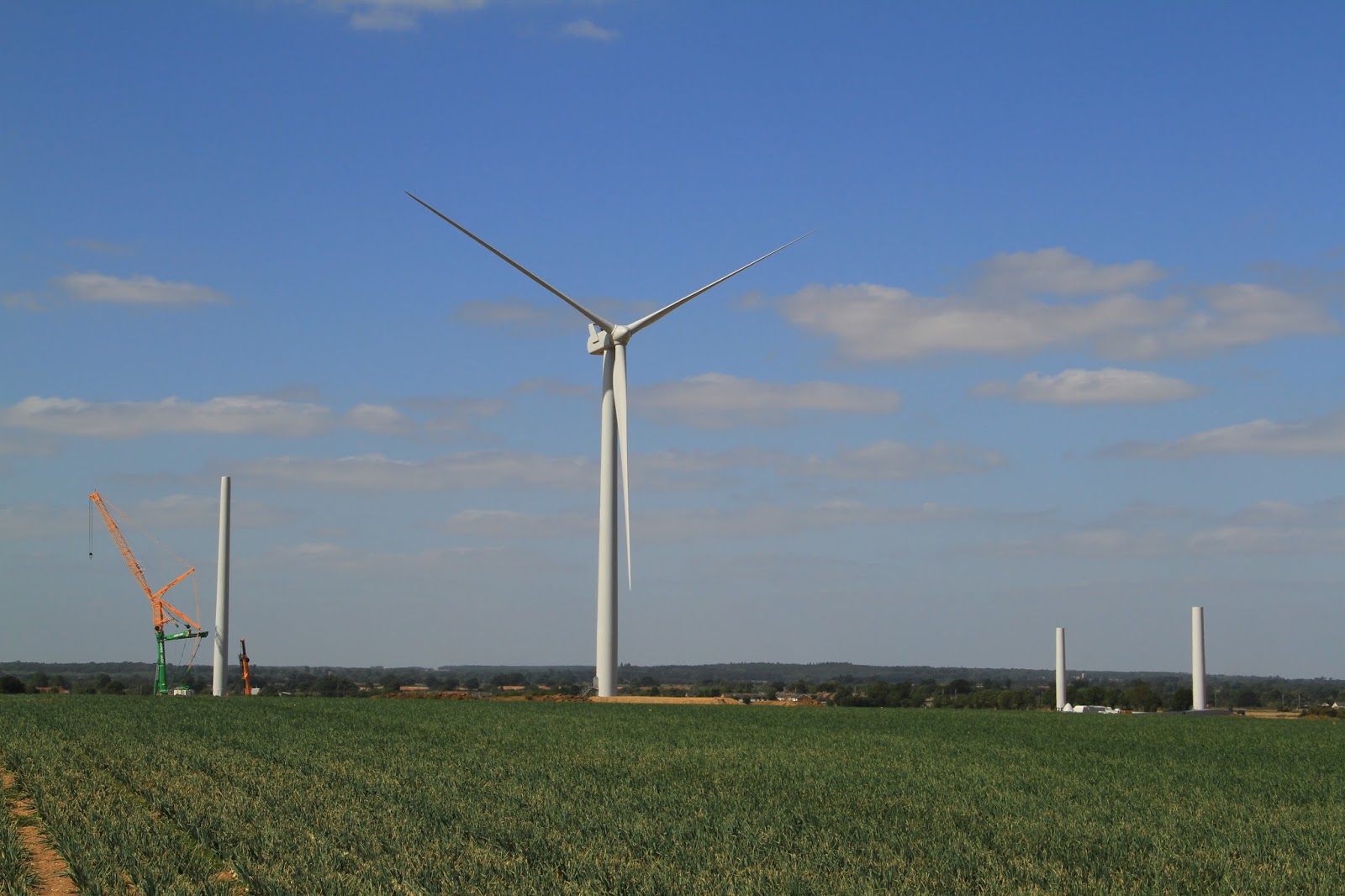
Progress

Clearly, all of the evidence is in favour of the wind turbines being built. Enough energy will be produced to power over 11,000 homes, preventing the release of between 18,000 and 43,000 tonnes of carbon dioxide from the burning of fossil fuels. It is a direction the world needs to take.

Turbine in the field
They also produce near to no noise, leaving the visual impact as the only impact that the people of Langford are so strongly opposed to. Which infuriates me for a number of reasons.

Close-up

Firstly, I personally like their appearance. But then that is personal preference and I can accept that some people may disagree. Some people like pugs, I think they are ugly. But, I wonder why people go to the extent of putting up posters and threatening to move homes because wind turbines are being added to an already polluted and fragmented landscape. I find it difficult to understand that they can put up with all of these, but can not bear the sight of a clean looking wind turbine, a symbol of greener energy and a more sustainable future.

Dissecting our landscape with wires

Telegraph poles and cables run across our vast expanses of green rolling countryside. But then we need these to enable tele-communication and transport electricity. They provide a benefit to us, and we accept them as necessary. 

Light pollution and the turbine

I have never heard anyone who lives in Langford complain about the ridiculously bright lights of the larger town of Biggleswade and the A1. The lights are necessary to enable us to see clearly at night. Yet they are a form of pollution. These street lamps and shop windows violate the light produced by stars that has traveled for millions of years to reach the Earth, they pollute our skyline with reds and yellows. But we accept them around here, because they are part of modern society. 

Buzzard in the Sun (m)
During the walk, I stop and listen to the sound of the skylark, rising high above our fields. Beautiful. My soul is immediately lifted by its upbeat and cheery sound. I am alerted to the buzzard soaring high above by its mewing call, as it circles around the sun. But, if I stop and listen to everything, I hear the not-so-distant hum of cars, lorries, motorbikes and vans on the A1. A constantly subtle barrage of noise that ruins the peace of our countryside. People are only deaf to the noise because of its constancy. Stop and listen. When was the last time you heard total, natural silence, coupled only with the very sound of nature?

A1 ugly

And then the electricity pylons. Only an architect could like an electricity pylon. They are attractive in their lines and symmetry, but are essentially huge metal towers with horrendously long cables running between them. Disgusting.

East Coast rattler

And what is this? A roaring, rattling lump of metal, fueled by electricity tearing through the countryside, no more than 50 metres from peoples homes in Langford. Stop the trains? No, because the trains serve them a direct purpose. They can make do with the trains because the trains get them from Biggleswade to London and back for about £20.


Langford behind the turbines

But these wind turbines are disgusting. The scourge of our landscape. I will consider selling my life-long family home because every time I look out across the farmers fields that have replaced our ancient woodland, every time I look over the high-speed rattling and roaring railway, through the telephone wires and electricity cables running across the land, I see a few large, tall, rather amazingly designed wind turbines harnessing the energy of the wind for electricity. These hideous constructions are built on our doorstep, as the human race attempts to fight the battle against depleting reserves of non-renewable fuel sources so that we can have the railway we want, the lights on at night, and boil the kettle to sit down and watch Strictly Come Dancing at the weekend with a nice cup of tea.

Give me a break. Stop being so selfish, and start opening your mind to the long-term future of our planet. Maybe it is a generation problem, and it is simply those that do not like change, those that accept the negative changes that have already occurred, and think that any more changes to 'their' landscape should not happen. This wind farm is a positive change for sustainability and the environment. They have to go somewhere, and that somewhere may change the view you wake up to in the morning.

Talking of which, I thoroughly look forward to sitting down with a nice cup of tea, and popping a bit of Strictly on the box.

And to make up for the lack of wildlife, here is a photo from my moths at night project I have been working on.

Capturing the flight of moths at night

Thank you for reading ya'll !

Friday, 23 August 2013

Purple; King's Wood, Rammamere Heath and Hitchin Lavender


The woods were warm, yet drenched with rain. There is nothing like the smell of a wet woodland on a summers day. The showers persisted, forcing me to decide between being too hot with a mac on but keeping dry, or getting wet, but staying cooler. The dark brown trunks of trees stood tall against the grey skies, the ferns dominated the woodland floor, engulfing the trees in waves of vivid green.

King's Wood
Walking through the woods, not a person to be seen or heard. A muntjac, feeding in the undergrowth, hears me at the last minute. Deer are acutely adapted to sensing predators, and have extremely good senses of smell, vision and hearing. Imagine having letter box pupils and being able to see 310' degrees, twist your ears to hear in all directions, and smell nine times better than any human. They really are incredible animals.

Amongst the woodlands, on the banks of the hillsides, small clearings in the woods allowed patches of heather to grow well. A beautiful pale shade of pink and violet flowers, with an almost silver appearance when caught by the light in the right way. A wonderful summer flower, providing a feast for many passing butterflies, moths and bumblebees!

A spinning abstract of the heather
Bee on Heather
By now, the occasional break in cloud and the showers allowed shafts of light to cut through the tree-top canopy, lighting up grasses like golden fireworks unleashed in the night of the trees' shadows.

Grass catching the light
Large clearings around the site provided great habitat for numerous other species. I imagine it to be a good site for reptiles, with plenty of open south facing banks and lots of cover in the form of long grasses, log piles, and burrows. Plenty of crickets and grasshoppers for the odd snack as well. Whilst on the subject of insects - the butterflies were incredible too! My first small copper of the year so far, speckled wood, silver washed fritillary and common blue. As I sat in the heathland enjoying the warmth of the midday sun, the occasional dragonfly joined me to rest on the open branches of logs and twigs. 

A male Common Darter (welcome to corrections!)

Silver washed fritillary

Common Blue female
Hitchin Lavender. I had driven past this place on numerous occasions, and often wondered what it was like having seen the classic photos of rows and rows of deep purple lavender, leading their way up the hillside into the skyline. Initially, I felt somewhat disappointed by its size, after envisioning endless purple in all directions, the large field of lavender was bordered by fields of grass and crops. Although I can not deny how awesome the field is...

Man picking lavender

As soon as I stepped amongst the lavender, sheer joy at the sight of thousands of insects overwhelmed me. Bumblebees, butterflies, moths and flies feasted on the nectar of the lavender. Swallows cut across the tops of the plants catching insects on the wing. The sound of the constant hum of bees broken only by the tiny winged bodies and red throats of swallows zipping past at high speed. Interestingly, bumblebees used to originally be called humblebees because of the loud humming sound they make when they fly...

Bumbles in the lavender

Common Blue

It takes an awful lot for me to like any of my photos. But the next photo is terrible. I could have pretended to try and capture the spirit of butterfly watching, when often you get a blurry flutter disappear into the distance. But this is my best attempt at photoing the beautiful clouded yellow butterfly, as it was carried in the wind across the tops of the lavender. It stopped to rest once, but not for long enough. Rachael described it as looking like 'a yellow piece of tissue caught in the wind'.

Clouded Yellow impersonating yellow tissue
Small tortoiseshell. What a beautifully and intricately designed butterfly. The blue scales that line the outer edge of its wings are really emphasised by the perfectly complimentary orange colours that dominate the wings. A real stunner!

Small Tortoiseshell 

I was really impressed with both the King's Wood and Rammamere Heath Wildlife Trust site, and Hitchin lavender. The lavender providing the foundations of a wonderful food chain, from plant to the insectivorous predator the swallow. Plus I got to take a bag of lavender home with me as well, of which I shall leave in my car in an attempt to mask its bad odours... Thank ya'll for reading, and keep enjoying this wonderful summer as best you can ! 

Wednesday, 14 August 2013

All on a Misty Morning... Strumpshaw Fen


On what felt like a rare afternoon off, followed by an entire day without work, I decided I needed to do something slightly out of the ordinary. So I packed a duvet, sleeping bag, toothbrush and walking boots into my car, grabbed some food and decided to spend the night in Norfolk, exploring Strumpshaw Fen. I had hoped to see a Swallowtail butterfly, a nice incentive to explore somewhere new and see a species I have never seen before. But this is not just any species. The Swallowtail is the largest, and probably most beautiful, butterfly in the British Isles. My chances were slim, being between the two imago phases of the year, where the first generation of adults would have died off and the second still in caterpillar phase, but it was worth a gamble...

First sight of the reserve

I arrived late. And spent dusk familiarising myself with the reserve. Deep winged and flying low over the reeds, a marsh harrier flew into the crimson sky. A beautiful place, packed with lots of birds, dragonflies catching smaller insects on the wing and plenty of mosquitoes. Standing still really was not an option. Within seconds I would have tens of mosquitoes attempting to feast on my blood. Scientists have recently filmed mosquitoes biting a mouse, check out those mouth parts! I look at them with a new found fascination and respect - incredible insects, despite the itchy aftermath!

Heron hunting in the mist

The site was peaceful, as the mist rolled in, and the last remaining light vanished. I headed back to the car and back to my place of rest for the evening.

Mist setting in

4:30am. The air thick with a heavy mist, the moisture in the air cold on the skin. Birds had just begun to sing as I made it back to the reserve. Has anyone ever heard a bittern call in August before? I heard two distant calls that sounded like bittern. Shortly after reaching the other side of the reserve, the sun had peeked over the woodland to the east.


Burning through


Dew laden nettles in the misty morning


By now my shoes were soaked through. The condensed dew drops clung to the grasses, reeds and bushes like tiny silver ball bearings. With every step, and every brush through the vegetation, my clothing slowly became saturated with the moisture. Is there a more magical sight to wake up to on a misty morning than the sight of the intricate masterpieces of webbing created by spiders, covered in dew? 


Web in the reeds

Drooping web

I sat in the hide, over looking the fen. The sun lifted some of the mist off of this tranquil setting, and birds began to explode into life. Water rail called from the reeds, the masterful fishermen the cormorant took off across the water. Herons made their way to the edge of the reeds to spear fish in the shallows, gull chicks begged for food on the muddy banks, while adults mobbed the hell out of the marsh harrier cruising quietly by as it patrolled the reed beds.  

Lonesome goose in the sunrise

Coot silhouette

Gulls doing their utmost to deter the marsh harrier!

Cormorant

Now the sun was up, and the temperature had risen slightly, I walked around along the ditches towards the area of the reserve where plenty of the swallowtails primary larval food plant, milk parsley, can be found.

The remains of what looked like roach, lay strewn across the path by the river. An otter perhaps? Butterflies had already started to take to the wing as they absorbed enough energy from the brightening rays of the sun. Peacock, gatekeeper and meadow brown. And a first for me this summer - painted lady!

Peacock

Painted lady

It did not take long to find the milk parsley. And, reliably, the caterpillar of the swallowtail lay within the milk parsley, where it had been feasting. 

A pair on milk parsley

Swallowtail caterpillar face

Although there was not much I could have done about the timing, and I had chanced my arm, I was almost disappointed that I did not see a swallowtail butterfly. Saying that, I did see its caterpillar, which is fairly impressive in its own right - there are some truly beautiful caterpillars around that should definitely not be overshadowed by their more popular imago phase! 

I like to make the point about just getting out there. I took a risk with the swallowtail, which, like most of my ideas at the moment, seemingly failed. But I sat and watched the sunrise from a comfortable hide, over looking a stunningly beautiful reserve. The dragon and damsel flies were mightily impressive, particularly by the wild meadow they have on site. Broad bodied chasers, common blue and emerald damselflies all made an appearance. 

Mating Emeralds 

 Such a diverse site, hosting an incredible array of animals. I will end on another spider web shot. Because they are magic... 

Web of beads

Once again, Norfolk has come up trumps! Thank you for reading ya'll..

Wednesday, 7 August 2013

Dunstable Downs; Butterflies, Bees, Burnets and Poplars...


The temperatures throughout the day have been much more tolerable over the past few days. The searing heat seems to have receded into comfortably sunny days, shaken with a few immense storms and heavy showers. However, it has taken me a while to get around to sitting, sorting the photos and writing the blog, so we will have to cast our minds back to the days where by 9 am, wearing only a t-shirt and shorts was far too much (unless you can work the sodden arm-pit look).

Between shifts at Whipsnade, I decided to head over to Bison Hill, and have a little stroll through the chalk grassland meadows across the hillsides. It has been an absolutely incredible year for butterflies, and I had hoped to find the time to get out and spot some!

Orchid in the grassland

Remaining flowers of a Pyramidal Orchid


By the time I got out onto the grasslands, it was plenty warm enough for the butterflies to be extremely hyperactive. And in the slight breeze, there were swarms of them. As I strolled the pathway, chalk blues, probably in their hundreds across the site, lifted up from the grasses like turquoise gems with wings.


Chalk Blue

Female Chalk Blue; a really naff photo, but one that shows off the beautiful colours!
Phwoarrr! Mating Blues...

The colours are astounding. Peacocks, with their deep, rich red scales decorated with the blue, black and cream eye spots. Large and small whites, as their name suggests, are pure white with the very tips of their wings dipped in black, sometimes with small black spots. The bright orange little gatekeepers, rest on the ground before fluttering off at first sign of disturbance.


Gatekeeper
The little larger, and much darker, meadow brown makes a frequent appearance. Ringlets, a very dark brown, with black spots surrounded by a ring of white or yellowy cream.

Ringlet

Another white, this time with a green tinge and some dark and defined scales along the veins of its wings, giving the butterfly its rather imaginative name... green-veined white!

Green-veined White
Not to forget the skippers. A dusty orange brown, the male of both small and large skippers were aggressively defending their territory, whilst keeping their eyes peeled for any passing females they can mate with.

Large Skipper

Large Skipper

Small Skipper

And last, but definitely not least, the marbled white...


Marbled White
An absolutely stunning butterfly, and the first I have ever seen! Not only have I seen a species I have never seen before, but I got to see tens of them. Tens of them amongst hundreds of other butterflies. However, I did notice a parasite on one of the marbled whites; check out the red mite on the photo below. It does not look very nice for the butterfly, but, apparently, the mites do them no actual harm. 

Butterfly with parasite
Of course, being out on the downs there was plenty of other animalian activity!

Six-spot Burnet Moth
I came across what looked like the next entrance to a colony of red-tailed bumblebees. Outside of the nest entrance lay tens of deceased bees. I do wonder whether this was a natural part of the cycle of life for a bumblebee, maybe the worker bees have moved them outside of the nest, or maybe there was another cause for a mass of dead bees to accumulate by the hole in the ground??

Dead bees!

Within just a 40-minute walk, I found 11 species of butterfly, of various sizes, colours and shapes. Surely, evidence enough that you do not have to travel halfway around the world to find the exotic and tropical colours of the wild. Try a short drive up the road to a wildflower meadow in summer. Here in the UK, we have 59 resident breeding species to choose from. So keep your eyes peeled, whether its in your back garden, whilst taking your kids to the park, or on your next spot of birding down the local nature reserve, and see how many colours you can spot!


I will end this heavily insect based post with another insect. This time a moth, found at work, by the wonderful catering team next door who have made me their first port of call to come over to help rescue any moths that have ended up inside the cafe. I am extremely grateful they do... stunning animals!

Poplar Hawk-Moth

On the tree

Once again, thank ya'll for reading folks! I really do appreciate it. Next post will include my brief trip to Strumpshaw Fen, Norfolk... Surely not more butterflies!?!